Industrial and warehouse lighting · 5 August 2025 · 8 min read
Cool-room and food-processing lighting in Australia
IP69K, washdown, condensation and the colour of meat — lighting that survives a food plant without lying about produce.
By Tom Brennan, Industrial and WHS correspondent, Perth, Western Australia
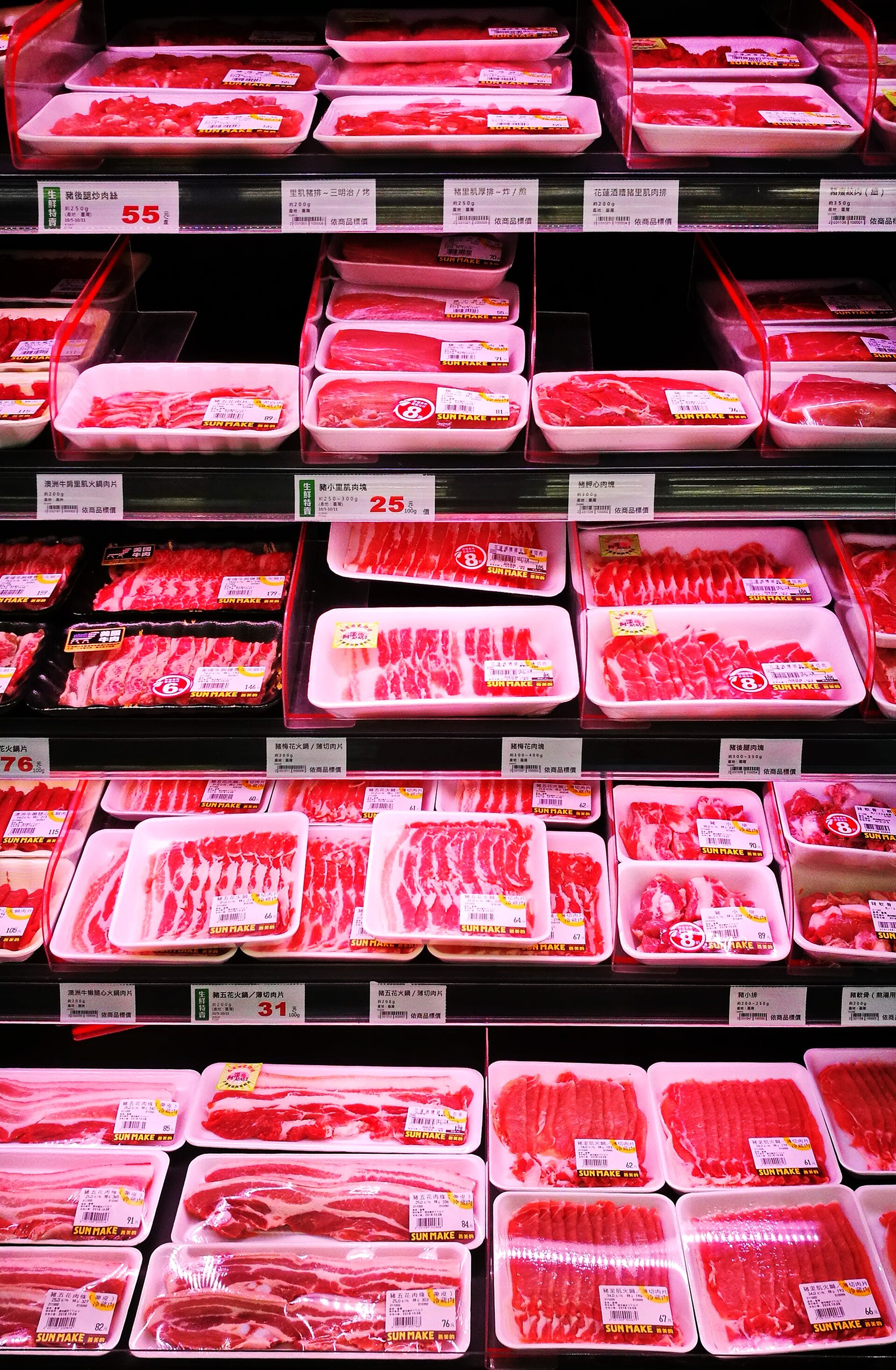

A cool room is not a small warehouse with a lower thermostat. It is a wet, reflective, hygiene-controlled volume where a luminaire is a condensation trap and a colour-rendering instrument. The same fitting that looked fine in a dry grocery aisle will fog, or make beef look like it has already been on the shelf too long.
This essay is a working method for lighting cool rooms, freezers and food-process halls in Australia. It belongs with the industrial and warehouse hub and with the high-bay selection guide when the same site has a dry store next door.
Name the room, the wash and the product
Write the process before the IP rating. A carton freezer in Dubbo, a smallgoods slice room in Melbourne and a seafood hall in Fremantle share a Standard and almost no other brief.
Ask, in this order:
- What is washed, with what, at what pressure and temperature, and how often?
- Is the room 2 °C, −18 °C, or a process hall that only feels cold because the doors are open?
- What is inspected by eye — carcass, trim, produce, label, foreign body?
- Who stands where, and do they wear a visor that already cuts light?
- Where does condensate go, and will a luminaire be a drip point over exposed food?
AS/NZS 1680 still names the visual task. Meat inspection is not bulk carton storage. Food Standards Australia New Zealand does not publish a lux table, but it does expect a premises that can be cleaned and a process that can be supervised. Lighting that hides soil, hides a blade, or lies about product colour is a food-safety defect dressed as a retrofit.
IP69K is a washdown story, not a badge
IP69K (from ISO 20653 / the old DIN 40050-9 language that still appears on cutsheets) describes resistance to high-pressure, high-temperature spray. It is the right rating when a hose or a clean-in-place lance will be pointed at the fitting. It is theatre in a dry packaging hall that is wiped with a cloth.
Pair the rating with the construction:
- Smooth, crevice-poor bodies. Finned heatsinks will hold protein and mould.
- Food-appropriate materials. Stainless or a documented food-area polymer, not a painted alloy that flakes into a tub.
- Gaskets that survive fat, chlorine, peracetic acid and 80 °C water.
- Cable entries that can be washed. A poorly glanded flex becomes a bacterial hotel.
- Mounting that does not create a shelf over open product.
IK still matters. Write the impact rating and the mounting height together. Do not confuse IP69K with “watertight forever”. Seals age. Specify a spare gasket as a scheduled part. Our audit essay is the field version of that sentence.
Condensation, cold start and the driver that dies at 4 a.m.
Cold air holds less water until a door opens. Then the luminaire is the coldest smooth object in the room and it sweats. Water on an optic becomes glare. Water in a seam becomes a failure. Specify a body that sheds condensate away from food, and an installation that does not put a junction box in the vapour path.
LED chips often enjoy the cold. Drivers, emergency batteries and cheap gaskets do not. A fitting rated to 0 °C will start sulking at −18 °C. Write the minimum ambient, the start temperature, and whether the driver sits in the room or in a warm plant space. Remote drivers can be a gift in a freezer and a hygiene problem if the cabling is lazy.
Thermal shock is the other Australian special. A fitting washed at 80 °C and then left in a 2 °C room is being asked to live two climates in one shift. If the site still has fluorescent in the freezer, do not treat the retrofit as a simple total cost of ownership win until you have counted access, hygiene windows, and the cost of a fitting that cannot be hosed.
Colour of meat, produce and the ethics of a pink lamp
Food lighting has a reputation problem because some retail cabinets still use spectra that make meat look redder than it is. In a process hall that trick is a process risk. A QA officer who cannot see brown or a bruise is not being helped by a “meat LED”.
What you actually want:
- A spectrum with enough deep red (a useful R9, not only a CRI 80 average) so beef and lamb look like beef and lamb.
- Enough short-wavelength energy that fat, bone, parsley and a blue glove remain distinct.
- A colour temperature staff will accept for a ten-hour shift — 3500 K to 4000 K is the usual Australian process default; 5000 K can help inspection.
- A trial on the actual product under the actual wall colour.
Produce is a different brief. Greens go grey under a red-heavy spectrum. Red fruit goes dull under a blue-heavy tube. If the hall packs mixed SKUs, design for honest colour. Do not use coloured spectra over inspection. Flicker belongs here because food plants still buy bargain drivers. A stroboscopic blade or bandsaw is a WHS problem standing in a washdown zone. Specify low flicker and measure it with the machinery running.
Hygiene, glass and the thing that must not fall in the mince
Write a glass policy. Some sites ban glass in open-product zones; others allow a documented, protected optic. Either way, a failed diffuser must not become foreign-matter. Prefer a captive, impact-rated optic that stays sealed after a knock.
Mounting height is a hygiene decision as much as a photometric one. Too low and you have a cleaning obstacle. Too high and you invent shadows under hoods. Linear runways over the line, with a shielded task light at the inspection point, beat a grid of UFO high-bays copied from the dry store.
Emergency lighting in a cool room is a specialist argument. Packs hate the cold. A generator that keeps process lighting alive is not an escape-lighting design. Read industrial emergency and exit lighting and test the gear in the cold, not in the amenities corridor. The standards hub is where the logbook lives after the auditor leaves.
What to write in the specification
Steal this structure and then edit it for the plant:
- Name the room temperature, washdown method, chemicals and food-area zone.
- Name each visual task — inspection, packing, circulation, freezer storage — and the maintained illuminance on a stated plane.
- Name IP and IK as a consequence of the wash and the impact, not as a shopping list.
- Name materials, gasket chemistry, condensate behaviour and the glass/foreign-matter policy.
- Name spectrum, CRI or TM-30, R9, and a product trial before bulk order.
- Name ambient rating, cold-start, driver location and emergency strategy at that temperature.
- Name cleaning of luminaires as a hygiene SOP, not as “the electrician will wipe them”.
Require a mock-up over the real line. A fitting that looks smooth on a bench can still create a drip edge once it is hung under a refrigeration coil.
Measurement and the Monday QA walk
Measure at the product, not at the slab. Hold the meter on the cutting board and the carton face. Record whether the room was in production. Walk with QA. If they already keep a torch in the apron, you have an inspection defect. If lamb looks tired on Mondays, check the spectrum before you blame the weekend shift.
The mistakes we keep seeing
Dry-store high-bays in a hose-down hall. IP69K fittings with finned bodies that cannot be cleaned. A pink “meat” spectrum over a process table. Emergency packs specified at −25 °C with a datasheet that stops at 0 °C. Remote drivers above a ceiling nobody can sanitise. Treating condensation as a facilities complaint instead of a design input.
Light the product so a trained eye can tell the truth about it. Then build a fitting that can be washed without becoming the next foreign-matter report. Everything else is a catalogue adjective.
Questions readers ask
- Is IP69K mandatory in every Australian food plant?
- No. IP69K is the right conversation for high-pressure, high-temperature hose-down. A dry packaging hall or a carton store may only need IP65 or IP66. Write the washdown method first, then the rating.
- Why does meat look different under LED than under old fluorescent?
- Many LED spectra are weak in deep red. Beef and lamb then look brown or grey even when they are fine. Specify a spectrum with honest R9 and a trial on the actual product, not a pink marketing lamp that hides spoilage.
- Do LED fittings like the cold?
- The diodes often get more efficient. The driver, the gasket and the emergency battery do not. Specify a rated ambient below zero, a driver that starts at that temperature, and emergency gear that is tested in the room, not in the corridor.
More in Industrial and warehouse lighting
- High-bay LED selection for Australian warehouses
Optics, mounting height, aisle versus open hall, IP and IK — how to specify a high-bay that still works when a forklift looks up at 2 a.m.
- Workshop lighting and WHS duties for Australian PCBUs
Task lighting, shadow, flicker and rotating machinery — what a PCBU actually has to get right under Australian WHS law.
- Industrial emergency and exit lighting under AS/NZS 2293
How emergency lighting behaves in dusty, cold, generator-backed industrial sites, and what the 2293 logbook is for.