Energy and controls · 16 April 2025 · 8 min read
LED total cost of ownership versus fluorescent
A total-cost method for comparing LED and residual fluorescent in Australian commercial buildings — tariffs, hours and maintenance, without a brochure’s ninety per cent.
By Priya Nair, Energy and sustainability editor, Brisbane, Queensland
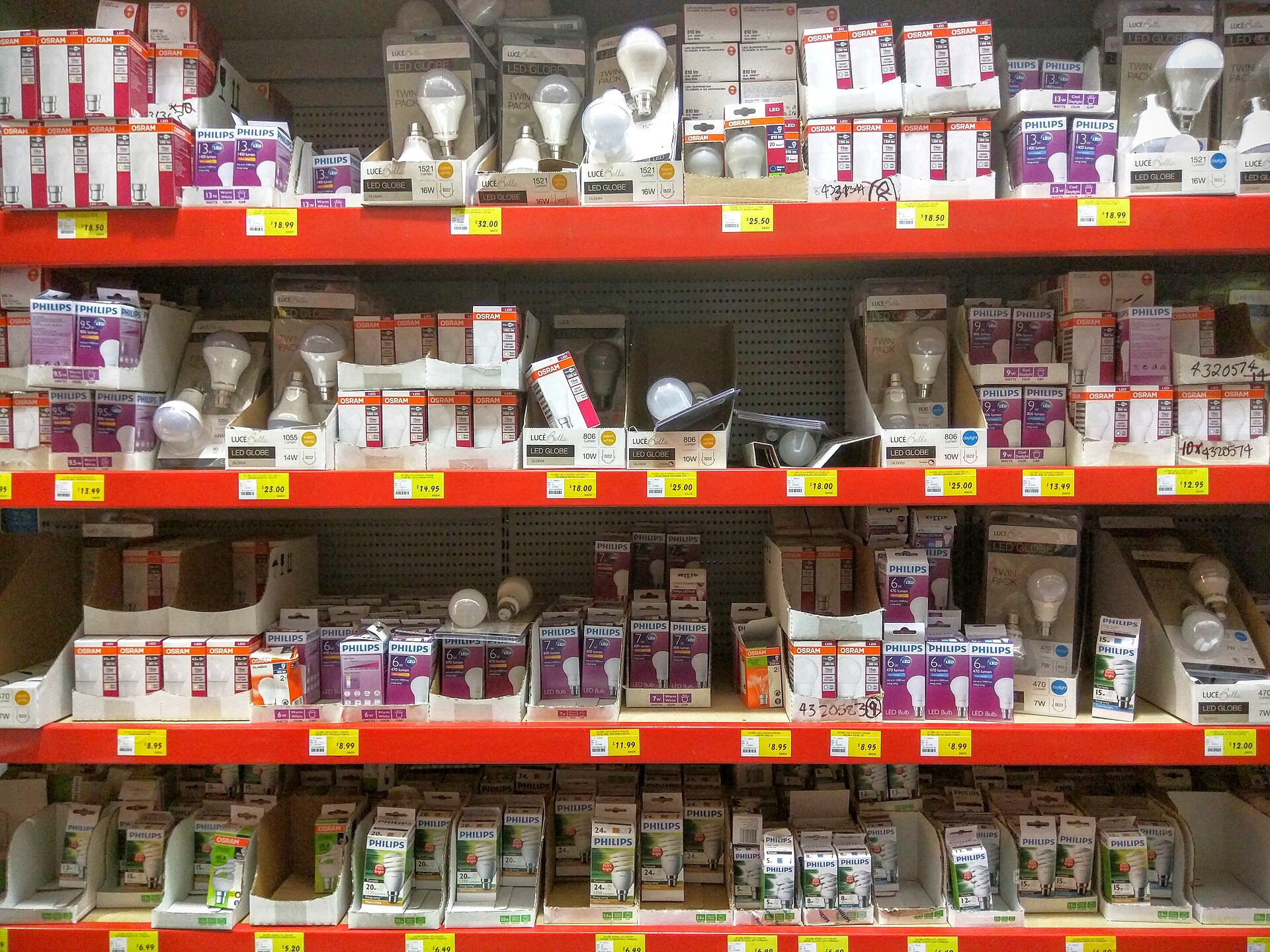

The most common lighting lie still told in Australian commercial buildings is a single percentage. “LEDs save ninety per cent.” Sometimes the speaker means a 50 W halogen versus a 6 W lamp. Sometimes they mean a whole floor of T5. Sometimes they mean nothing and hope you will not ask for the meter. This desk will not print that percentage as a fact. Our editorial standards treat invented savings as a material error.
This essay is a total-cost method you can take to a finance meeting. It belongs with the other energy and controls pieces because the comparison dies without hours, tariff and a control strategy. If you do not yet know what is on the ceiling, start with an audit.
TCO is not payback on a napkin
Simple payback — extra capital divided by annual energy saving — is a screening tool. It hides labour, access equipment, residual stock, colour mismatch, and the year-four driver failure. Total cost of ownership asks: over a stated period, what cash leaves the organisation, and what risk sits off the page.
I use a period the owner already understands. A tenancy fit-out might be seven years. A base-building car park might be fifteen. Do not run a twenty-five year LED fantasy on a five-year lease.
The cash lines I put on the sheet:
- Design, specification and commissioning, including DALI if you claim control savings.
- Supply of luminaires, emergency variants, sensors, spares.
- Install, access, after-hours labour, hazardous-materials controls, disposal of mercury lamps.
- Energy, month by month if the tariff is time-of-use or has a demand component.
- Maintenance labour and replacement modules for both options.
- Relamping or group replacement campaigns you will still run.
- Downtime or make-good if a unique fitting dies and the room cannot work.
I do not put “brand value” or “wellness” on the cost sheet. Those may be real. They are not watts.
Hours are the variable that humiliates wattage
A 36 W T8 in a toilet that runs two hours a day is a different investment from a 36 W T8 on a 24-hour hospital corridor. LED wins more often on the corridor, not because the physics changed, but because the hours multiplied every wasted watt. Ask for a time clock report, a BMS trend, or a data-logger. Guessing “office hours, 10 hours, five days” on a building whose cleaners start at 4 p.m. and whose traders stay until 8 p.m. is how Brisbane models miss the bill.
After-hours lighting is usually the embarrassing line. Many Australian offices still burn a polite fraction of the floor all night for security theatre. If the LED project does not change that, do not give it the saving. If it does change that — absence detection, a genuine off scene, a cleaner’s override that expires — write the control as a separate measure. Controls are often worth more than the chip.
Tariffs are not a single cents-per-kilowatt-hour
Commercial tariffs in the National Electricity Market pile retail energy, network charges, peak windows, demand or capacity charges, and sometimes environmental certificates. A lighting load in the Queensland afternoon peak costs more than the same load at 11 p.m. A warehouse that attracted a demand ratchet because the high-bays started in one hit may care more about inrush than about lumens per watt.
Use the last twelve months of invoices, and the tariff the energy manager expects after the next contract. I would rather show a range than a fake precision. Demand charges deserve their own line: a car park or cold store that starts every fitting at dusk can be visible. Staggered contactors or a DALI ramp are cost items, not niceties.
Residual fluorescent is still in the building
Almost no Australian commercial retrofit replaces everything on day one. The T5 grid in the tenancy goes. The car-park T8 stays “until next year”. The plant room stays fluorescent because the IP rating was hard. The emergency battens stay until the 2293 report forces the issue.
Your TCO must keep those circuits in the fluorescent column and in the site total. Otherwise you will promise a building-level saving the meter cannot see. NABERS assessors are not sentimental about this. Neither am I.
Residual stock also sets the colour and the spare. A mixed floor costs more to maintain because every failure is a matching problem. That cost belongs in the “do nothing” and the “partial LED” cases. See colour temperature and TM-30 before you assume the leftover T5 “looks close enough”.
Fluorescent is not one baseline
T8 on a magnetic ballast is a fat baseline. T5 with a decent electronic ballast in a 2008 office is a thin one. Compact fluorescent downlights often have terrible optical efficiency, which is why a good LED downlight can look dramatic in a reception and modest in a modelled open plan. Halogen is the only common commercial source where very large percentage cuts are routine — and even then labour depends on the ceiling. Marcus covers that job in the retrofit essay. Do not transfer a halogen percentage onto a fluorescent grid. Measure actual circuit watts; ballasts and emergency packs eat power.
Maintenance labour can flip the winner
LED marketing assumes you never climb again. Australian access costs assume you will. A high-bay over a live aisle, a sterile food room, a secure data hall, a courthouse after hours — the labour to change one failed board can exceed the energy saving of that fitting for a year. That is an argument for reliable LED with a real spare, not an argument for the cheapest chip.
Fluorescent still has a group-relamp logic some FM teams understand. LED needs a different contract: inspect, clean, replace failed drivers, update the audit families. If you do not fund that, the LED TCO grows a silent line called “we will deal with it when the floor looks bad”.
Cleaning sits here too. A dirty LED is not efficient. The maintenance factor you used in the 1680 calculation is a cost assumption.
A worked method without a fantasy result
Here is the sequence I run. I will not invent a percentage at the end.
- Fix the boundary: which floors, which meters, which residual circuits stay.
- Fix the hours: measured or logged, including cleaners and security.
- Fix the tariff: energy and network, with peak and demand identified.
- Build the present-state load from circuits or measurements, not from a catalogue.
- Build the proposed load from specified fittings and a control narrative you will actually commission.
- Price capital and access from a contractor who has seen the ceiling.
- Price maintenance for both options over the chosen period.
- Sensitivity-test hours (±20 per cent) and energy price. If the decision flips, say so.
If the LED case only wins when you assume a ninety per cent cut and a 24-hour baseline the building does not run, the LED case has not won. If it wins on hours plus avoided relamp labour plus a control strategy, put that sentence in the paper. Precision is the point.
HVAC cooling credit is a climate-zone footnote, not a default. In NCC zones 1 and 2 I will discuss it with the mechanical engineer. In a temperate night-dominated load I usually leave it out. See climate-specific lighting and Section J so the energy model and the TCO do not tell two stories.
What I tell the owner
Buy the visual result and the compliance result first: 1680, 2293, a control system someone can operate. Use TCO to choose among options that already pass those tests. Do not use TCO to justify a gloomy, glary, uncertified tube dump.
A fluorescent floor can still be the honest choice for a two-year lease with a landlord who will demolish the ceiling. An LED floor with meters and scenes is usually the honest choice for a building you intend to rate under NABERS or Green Star. The method is the same. The inputs change.
If a vendor slide still says “up to 90%”, ask for the baseline, the hours, the tariff and the residual load. If they cannot produce them, you already have the answer. Field notes that show a TCO surprise — good or bad — can be pitched through write for us.
Questions readers ask
- Are LED savings really around 90 per cent?
- Not as a general claim. A halogen downlight swapped for a good LED can drop most of its wattage. A T5 office grid with electronic ballasts cannot. Anyone who quotes “up to 90%” without a baseline, hours and a tariff is selling a poster.
- What belongs in a lighting TCO?
- Capital, install, energy at the actual tariff and hours, maintenance labour, spares, disposal, controls, downtime, and residual fluorescent you are not replacing. Omit any one of those and you have a brochure.
- Should I include HVAC cooling credit?
- Only if you can defend it for that climate and that air-handling system. A Brisbane interior may feel a lighting heat cut. A Hobart night-time warehouse will not. Write the assumption or leave it out.
More in Energy and controls
- LED retrofit for Australian commercial buildings
How to replace T8, T5 and halogen stock in a real Australian commercial building without breaking emergency lighting, asbestos ceilings or the control strategy.
- NCC Section J lighting energy provisions
How NCC energy provisions treat interior lighting power, control credits and climate zones — and why they do not replace AS/NZS 1680 in an Australian building.
- DALI lighting controls and BMS integration
DALI-2, gateways and the commissioning steps that turn a lighting bus into something a BMS can actually use in an Australian commercial building.