Design and specification · 25 June 2025 · 8 min read
Lighting for tropical, arid and temperate climates
Dirt, heat, cyclones and salt — how commercial lighting hardware and maintenance change between Darwin, Alice Springs and Hobart.
By Tom Brennan, Industrial and WHS correspondent, Perth, Western Australia
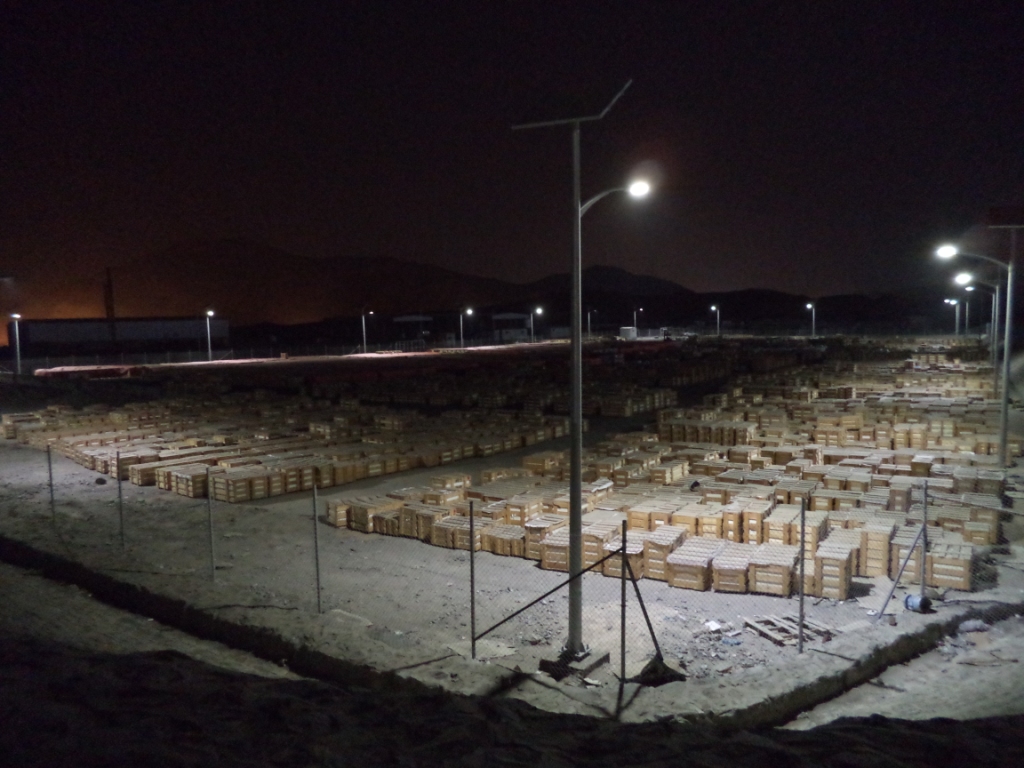

A luminaire is a climate device. It dumps heat, it collects dirt, and it sits in wind that Darwin and Hobart do not share. I have replaced the same imported high-bay in a food plant outside Perth, a shed near Alice Springs, and a coastal workshop in the Pilbara, for three different reasons: heat, dust, and salt. The datasheet was identical. The failures were not.
This essay is a field method for specifying commercial and industrial lighting across Australian climates. It sits in design and specification. If you only came for an IP rating, stay for the maintenance factor. That is where the climate actually lands in the lux calculation.
Three towns, three atmospheres
I use three reference towns because owners recognise them. Translate to your site.
Darwin is NCC climate zone 1: heat, humidity, insects, mould, a wet season that finds every gasket, and cyclones. External lighting is a wind and corrosion problem. Internal lighting is a heat and hygiene problem. A ceiling void in March is an oven. Drivers derate or die. Photocells fill with insects. Emergency packs cook. The sky is brutally bright, so daylight is both a gift and a glare weapon.
Alice Springs is zone 3: hot dry summer, cool nights, dust that is a design load, and UV that destroys plastics that survived a Melbourne car park. Fine red dirt enters “sealed” fittings through pressure change as the night cools. There is less mould than Darwin and more abrasion. Labour is scarce. If a unique driver fails, the spare on the shelf in Adelaide is not a spare.
Hobart is zone 7: long grey daylight, low winter sun, rain, and a kind of dirt that is milder until you meet a marine edge or a wood-fired industrial neighbour. People run lighting more hours. Corrosion is slower except on the water. The failure mode I see is not cooked boards; it is under-maintenance because everyone assumed the climate was “easy”.
Perth, where I sit, borrows from all three: hot roof spaces, coastal salt on the Fremantle side, dust inland, and a glare season that occupiers underestimate. Do not write “WA conditions” as if the state were one room.
Heat is a driver problem before it is a lumen problem
LED marketing assumes 25 °C ambient. Australian roof spaces and plant rooms laugh at that. Ask for the ambient rating at the installed location, not the showroom. A high-bay under a metal roof in Karratha or a Darwin rail shed needs a derating conversation, a remote driver if you can get the heat out of the optic, and a mounting that lets air move.
Symptoms of a climate the specifier ignored: early colour shift, flickering that comes and goes with the afternoon, emergency duration that passes in July and fails in November, and a TCO that looked brilliant because nobody costed the second installation.
Write maximum ambient, driver location, and a lumen-maintenance figure that matches that ambient. If the supplier only has a 25 °C TM-21, you do not have a tropical product. You have a hope.
In temperate buildings the heat problem hides in winter: sealed rooms, heaters, and fittings stuffed with insulation leftover from a halogen era. Marcus’s retrofit notes on IC ratings apply in Hobart too.
Dirt decides the maintenance factor
AS/NZS 1680 wants a maintained illuminance. The maintenance factor is where climate enters the lighting calculation. A 0.8 copied from a Sydney office is fiction in a cotton gin, a feedlot workshop, an underground car park with red dust, or a kitchen canopy approach.
I set dirt categories with the facilities manager, not with the software default:
- Clean commercial: filtered air, regular wipe. Factor can be optimistic if the cleaning contract names luminaires.
- Industrial moderate: warehouse, dry process. Shorter clean cycle, tougher IP, no open troffer.
- Severe: wet process, ore, grain, insects. Hose-down ratings that are real, not a sticker; gaskets you can replace; a factor that assumes you will still be late.
Alice Springs dust is fine enough to pretend the fitting is clean until you open it. Specify a pressure-equalising or truly sealed body, then still clean it. Darwin insects will find a 0.5 mm gap and turn a photocell into a grave. Hobart marine fittings need a wash more than they need a speech about IP66.
Cleaning is WHS. A scissor lift in a live aisle, a cyclone-season backlog, a remote camp — the climate includes the labour. Hold spares on site when the airport can close.
Cyclones, wind and the idea of next week
In cyclone regions, external lighting is a structure. Check the terrain category, the fixing into the building or pole, the wind rating of the luminaire and the bracket as a system, and what happens to the aiming after a season of vibration. I have seen floodlights that survived the wind but finished aimed at the neighbour.
Design for a week you cannot fly a crew. That means:
- Robust attachment, documented, not a tek screw folklore.
- Spares on the territory, not on the mainland only.
- Controls that fail to a safe lighting state. Marcus’s DALI power-on and system-failure levels matter when the network is down.
- Emergency lighting that was tested before the season, not after. See AS/NZS 2293.
Solar perimeter lights look clever on a warehouse fence until you meet wind, theft, and a battery that hates heat. I will use them on a genuine off-grid edge with a specification, not as a way to avoid a circuit on a cyclone coast.
Salt and chemistry
Coastal Queensland, the Top End, the WA coast and any harbour shed eat cheap powder coat, zinc that was a suggestion, and stainless that was the wrong grade. Specify the corrosion category the way a paint spec would: atmosphere, distance from surf, chemical washdown. Food plants add chlorides and acids that are not in the marine brochure. Mining adds sulphides and ore dust.
Use compatible metals. An aluminium body, a mild-steel bracket and a stainless fastener in a salty wind is a battery. I have undone that battery with a grinder.
Gaskets are part of the corrosion spec. A UV-killed gasket in Alice or a mould-killed gasket in Darwin is an IP rating that expired. Write a replaceable gasket and a spare.
Controls, daylight and the climate of people
People in Darwin close blinds and run air-conditioning. People in Hobart leave lights on because the sky is a grey blanket. People in Alice start early and finish when the heat peaks. Daylight integration and Section J have to use those hours, not a national average.
Sensors need the right enclosure and the right physics. PIR on Darwin glass sees heat. Dust coats ultrasonic heads. A temperate office PIR is not a tropical loading-dock sensor. Specify, mask, clean.
Colour shifts faster in heat. Write the CCT and TM-30 tolerance and expect to group-replace earlier in zone 1 than in zone 7. Inclusive and aged-care work in the Territory still needs the even, low-glare night path Elise describes in accessible lighting. Climate is not an excuse for a glare-bomb security flood in a courtyard.
What I put in the specification for a climate-split project
If the client has a Darwin depot, an Alice workshop and a Hobart store, I do not issue one luminaire schedule with a hopeful IP65.
I issue:
- A climate and atmosphere line per site.
- Ambient rating and driver location.
- IP, IK, corrosion category, gasket and finish.
- Wind and fixing notes for externals.
- Maintenance factor and cleaning interval per site.
- Spare holding and a unique-parts ban for remote sites.
- Photocell and sensor enclosure.
- Hold points: sample in the worst climate first, not in the showroom.
Energy still counts. A tropical high-bay that dies in year two has a terrible TCO no matter how many lumens per watt it printed. NABERS will not console a dark aisle.
Light the task under 1680, then ask what the air will do to the fitting before the next audit. If a climate failure taught you a hardware rule — salt, hoppers, dust, wind — write for us. The editorial standards want the town and the failure mode, not a national claim.
Questions readers ask
- Can I use the same high-bay in Darwin and Hobart?
- You can use the same optical family if the IP, corrosion category, ambient rating and maintenance factor are rewritten for each site. A sealed fitting that survives a Tasmanian shed can still cook its driver in a Darwin roof or fill with dust in Alice Springs.
- Do cyclones change the lighting specification?
- They change fixings, wind load, external gear and the assumption that you can send a crew up next week. Design the attachment and the spare holding for a closed airport, not for a calm Saturday.
- Is salt only a coastal problem?
- Coastal salt is the obvious case. Inland industrial sites have their own chemistry — fertiliser, ore dust, washdown — that eats the same cheap powder coat. Name the atmosphere, not the postcode.
More in Design and specification
- How to write a commercial lighting specification
A structure for Australian commercial lighting specifications — scope, performance, substitution rules and hold points — that still works after value management.
- Colour temperature, CRI and TM-30 explained
What CCT, CRI and IES TM-30 actually measure, where they mislead, and how to write them into an Australian commercial lighting specification.
- Daylight integration in Australian buildings
How to use daylight in Australian commercial buildings without glare, dead photocells or a Section J credit that the blinds quietly cancelled.