Energy and controls · 28 September 2025 · 8 min read
LED retrofit for Australian commercial buildings
How to replace T8, T5 and halogen stock in a real Australian commercial building without breaking emergency lighting, asbestos ceilings or the control strategy.
By Marcus Hale, Electrical contractor and specifier, Melbourne, Victoria
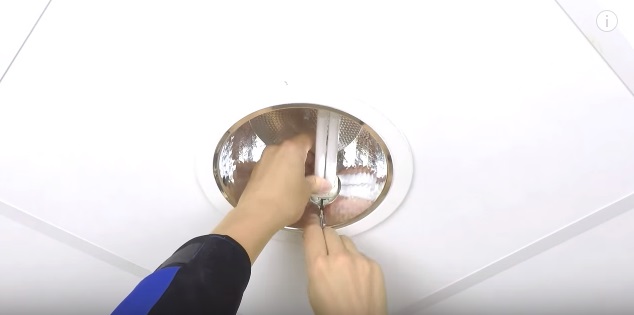

Most Australian “LED retrofit” quotes are a lamp count multiplied by a catalogue wattage. That arithmetic ignores the ceiling you will open, the emergency pack you will orphan, and the cleaner who still thinks a fluorescent tube is a consumable. This is the method I use on commercial floors in Melbourne and regional Victoria. It belongs in energy and controls because the savings only exist if the installation, the controls and the logbook survive the swap.
If you came here from a brochure that promised a ninety per cent cut, stop and read total cost of ownership first. The retrofit is a construction job. The bill is a later paragraph.
Start with a survey, not a carton
Walk the building with a circuit schedule, a ladder and a camera. Group fittings the way an electrician will actually work, not the way a spreadsheet likes rows. Typical Australian commercial stock still includes:
- T8 battens on magnetic ballasts, often in back-of-house, car parks and 1990s offices.
- T5 battens and troffers from the mid-2000s efficiency push, with electronic ballasts that may or may not like a “plug-and-play” tube.
- Halogen downlights in tenancies, receptions and older hospitality rooms, frequently on unlined plaster and sometimes on the same circuit as a fan or a sensor.
- High-bays in warehouses and loading docks that were “upgraded” once already, usually to a cheap LED that has already yellowed.
- Exit signs and emergency luminaires that nobody listed because they were not in the energy model.
Record mounting, IP rating, control gear location, and whether the fitting is an emergency type. Our audit essay is the longer version of this walk. Do not skip it because a vendor offered a free lux “survey” from the car park.
T8 and T5 are not one product
LED tubes sold into Australia still arrive as three different animals. Type A rides the existing ballast. Type B is mains-wired and wants the ballast out. Hybrid types do both and confuse the next person who opens the fitting. I will not take a Type A tube on a twenty-year magnetic ballast in a public corridor. The ballast still burns watts, still fails, and still sits in a ceiling that may contain asbestos. Write the type in the spec. Ban “equivalent LED tube” as a substitution.
T5 is worse because the electronic ballast was the selling point in 2008. Some LED T5 lamps behave. Many flicker, hum, or die when a sensor dumps a capacitive load on the circuit. If the troffer is worth keeping, convert it properly: new LED board or a listed retrofit kit, new driver, documented wiring, and a label on the fitting that says what it now is. If the troffer is a stained acrylic relic, replace the luminaire. You are not saving the planet by preserving a yellow diffuser.
For battens over storage cages and plant rooms, a new LED batten is usually cheaper than a clever tube once you count labour, disposal and the second visit when the first tube batch fails.
Halogen downlights and the ceiling they live in
Halogen MR16 and GU10 downlights are still hiding in commercial suites that were fitted out when “warm and sparkly” was a brief. The retrofit is not a lamp. It is a thermal, fire and acoustic problem. Check the building’s fire-resistance requirements, the insulation piled over the can, and whether the ceiling is a fire-rated plaster system that was never meant to host a cheap LED retrofit with a plastic spring.
I have opened CBD ceilings where the halogen transformer farm was the only thing keeping the insulation off the plaster. Pull the transformers, you change the thermal picture. Specify an IC-rated LED downlight for the ceiling type you actually have, not the one in the supplier’s suburban display. If the tenancy wants a dimmable, low-glare result, do not use a hardware-aisle lamp in a commercial reflector. See glare control and colour and TM-30 before you lock 3000 K because the sample looked “nice” on a desk.
Emergency lighting is in the job whether you priced it or not
AS/NZS 2293 does not care that your purchase order said “energy upgrade”. If you isolate a circuit, change a fitting that contains an emergency pack, or alter the normal lighting that occupants use to leave the building, you have touched the emergency system. Test before you start so you know what already failed. Test after so you can prove you did not add failures.
Common sins: leaving maintained emergency fluorescents on a floor of LED battens so the corridor looks green at 6 p.m.; putting LED tubes into emergency battens that were never assessed for that conversion; forgetting that a monitored system needs new addresses. Read AS/NZS 2293 testing and logbooks and write the hold point into the contract. If the logbook stopped in 2019, the retrofit is also a compliance catch-up.
Asbestos, dust and the other ceiling surprises
Plenty of Australian commercial stock from the 1960s to the 1980s still has asbestos-containing ceiling tiles, backing boards or mastic. A lighting retrofit that punches a hundred new holes without a hazardous-materials assessment is a WHS event, not a sustainability story. Assume nothing from a 2014 “clear” letter that covered one tenancy fit-out.
Even without asbestos you will find mineral fibre, insulation stuffed into downlight holes, data cabling tied to battens, and sprinkler heads closer to the new fitting than the sprinkler standard likes. Allow for isolation and a cleaner who is not the electrician. In food plants the dust is a hygiene hold point. Tom’s notes in tropical, arid and temperate design apply inside as well — Darwin warehouses and Redfern basements both eat fittings, for different reasons.
Controls are the retrofit you will regret skipping
Replacing a T8 with an LED batten and leaving the lighting on a 24-hour contactor is how you get a polite energy saving and a furious NABERS assessor. At minimum, put absence or occupancy sensing where the room empties, and a time schedule on the floor that used to burn all night for the cleaners. Better: a DALI bus with scenes that match the tenancy, and a photocell on the north glass that actually dims.
Do not assume the existing C-bus, Dynalite or 1–10 V loop will love a new LED driver. Some will. Some will strobe. Commission a sample bay before you buy two thousand fittings. If the building has a BMS, decide now whether lighting stays a lonely panel or becomes a gateway point. That decision belongs in the specification, not in a variation in week six.
Electrical, certificates and the boring legal layer
AS/NZS 3000 still applies, as do the state electrical safety rules, the certificate of electrical safety, and the building’s essential-safety-measures regime. LED drivers add earth-leakage and inrush. Old RCBOs that survived a fluorescent load may nuisance-trip — stagger drivers rather than blaming a “sensitive” switchboard. Document the as-built: circuit, fitting type, driver, emergency status, control address. Disposal of fluorescent tubes is a mercury-handling job, not a skip-bin job.
Energy, Section J and the story you will tell the owner
A retrofit can improve NABERS if the meters see it and the hours drop. It can also fail NCC Section J if someone treats a floor-wide replacement as an invisible maintenance item. Talk to the certifier early. Measure a sample of rooms to AS/NZS 1680 after the swap so you have not “saved energy” by making the desks gloomy.
Specify maintained illuminance, a maintenance factor, and a night measurement. Day-one LED output is not the design. If the owner wants a payback slide, give them hours, tariff and residual fluorescent circuits, not a percentage copied from a bag of lamps.
What a competent retrofit programme looks like
- Audit, hazardous-materials check, emergency baseline test.
- Sample conversion or replacement, including controls and a lux grid.
- Specification with product types, substitution rules and hold points.
- Floor-by-floor cutover that keeps egress lighting legal overnight.
- Commissioning, logbook update, certificates, spare schedule, cleaning clause.
That is not slower than a tube dump. It is the difference between a building that still works in 2029 and one that fails the first six-monthly emergency test. If a clause already failed in the field, the write for us page is open. We edit against the editorial standards, not a supplier’s comfort.
Questions readers ask
- Can I drop LED tubes into existing T8 battens and call the job done?
- Only after you name the tube type, the ballast, the wiring change, the emergency fittings on that circuit, and who signs the certificate of electrical safety. A tube swap that ignores those items is a defect, not a retrofit.
- Do I have to upgrade emergency lighting at the same time?
- If you touch a circuit that feeds emergency luminaires, or you change the normal-lighting arrangement they sit in, treat AS/NZS 2293 as in scope. Leaving old nickel-cadmium packs on a new LED grid is how buildings fail their next discharge test.
- Will a retrofit trigger NCC Section J?
- Alterations that change lighting in a storey or tenancy can bring the energy provisions back onto the desk. Check the current NCC and the certifier before you assume a like-for-like lamp change sits outside Section J.
More in Energy and controls
- NCC Section J lighting energy provisions
How NCC energy provisions treat interior lighting power, control credits and climate zones — and why they do not replace AS/NZS 1680 in an Australian building.
- DALI lighting controls and BMS integration
DALI-2, gateways and the commissioning steps that turn a lighting bus into something a BMS can actually use in an Australian commercial building.
- Lighting audits, maintenance and relamping
How to audit an Australian commercial lighting stock, group what you find, buy spares that will still exist, and clean fittings so the maintenance factor is not a fiction.