Outdoor and civic lighting · 1 July 2025 · 8 min read
Precinct, campus and public-realm lighting
How Australian campuses and councils light paths, plazas and wayfinding without flattening the night or ignoring dark-sky and neighbour duties.
By Priya Nair, Energy and sustainability editor, Brisbane, Queensland
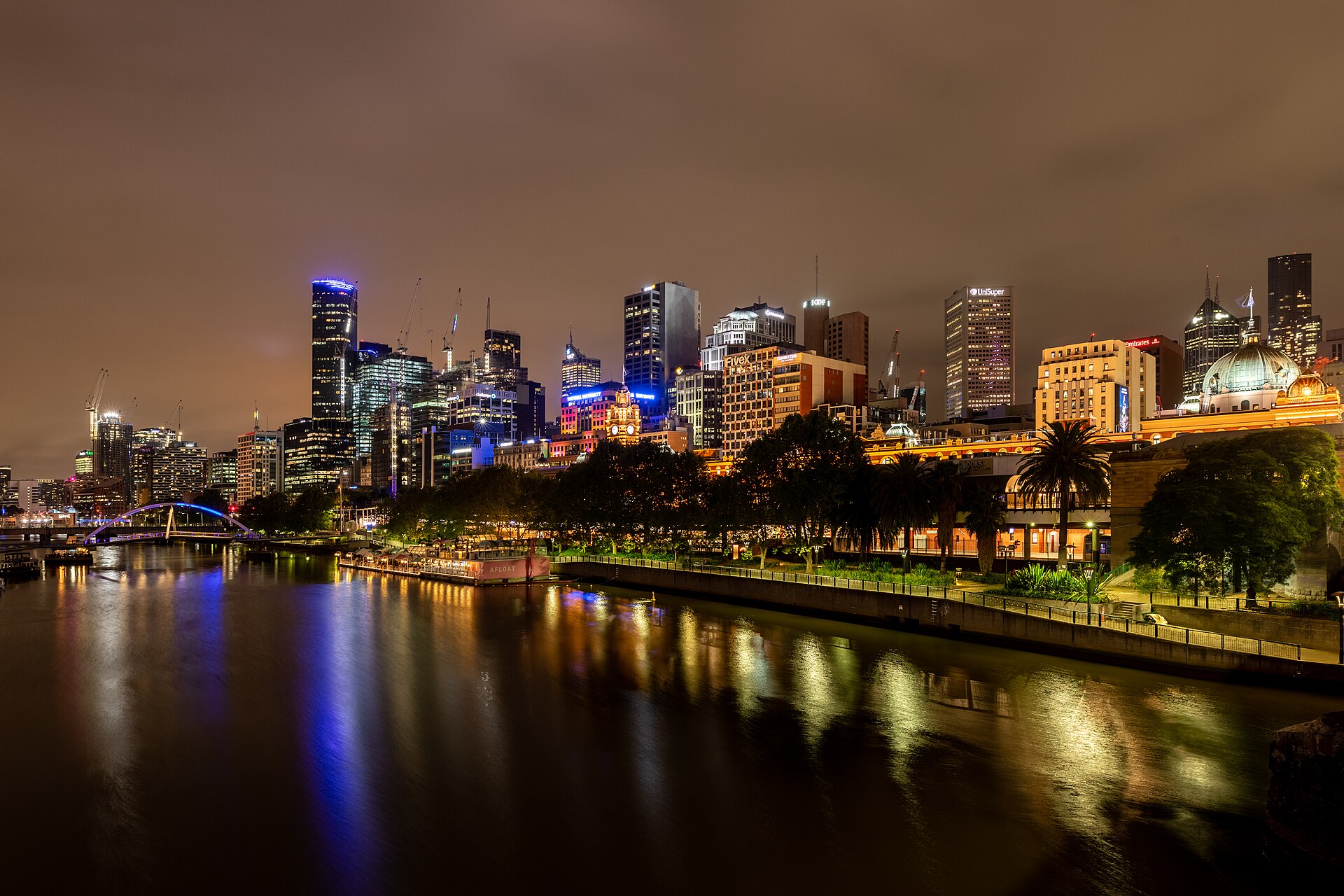

A campus after dark is not a street catalogue and it is not a festival. It is a set of paths, entries, bicycle routes, service roads, residences and a lawn someone will try to floodlight because the render looked civic. Councils inherit the same problem at precinct scale: a mall, a foreshore, a civic square, a car park, and a resident who already knows the name of the lighting engineer. Australian work adds insects, sport, exam-week occupancy, and a dark-sky conversation that is no longer only for outback shires.
This essay is an energy-and-wayfinding method for precincts. It lives on the outdoor and civic hub with car parks, facades and sports fields. Colour is CRI and TM-30 when faces and materials matter. Controls are DALI and BMS when the precinct is more than a photocell. If the campus has a food court, also read hospitality; the terrace spill is the same neighbour.
Name the journeys, not the pole height
People on a campus are walking to a library, a lab, a bus, a college bedroom or a 6 a.m. rowing shed. People on a civic precinct are walking to a station, a pub, a car and a water taxi. Lighting follows those journeys. A single “15 lux average, 4000 K, 6 m pole” across a university is how you over-light a service road and under-light a dog-leg between buildings.
Write a hierarchy:
- Primary pedestrian spines and accessible routes: even, glare-controlled, faces readable, a camera that works.
- Secondary paths: lower average, still uniform enough that a bend is not a black pocket.
- Plazas and lawns: a residual that feels public, not a sports flood; feature layers on a curfew.
- Service and vehicle routes: AS/NZS 1158 thinking, cut-off, no spill into student housing.
- Entries and addresses: vertical light on a sign, a face and a door, which is wayfinding.
Open the current AS/NZS 1158 parts that apply to public spaces and pedestrian areas, and AS/NZS 1680 where a colonnade or a covered street is really an interior. Then open the campus security map and the Disability Discrimination Act overlay. Lighting an accessible path to a lower standard than the ceremonial stair is a compliance and a dignity failure. See accessible lighting.
Wayfinding is contrast and sequence, not more lumens. A glowing entry, a consistently lit spine, and a darker garden to the side will get a visitor to the right door. A precinct that is equally bright everywhere has no address. Markers — bollards, low walls, a lit underside of a canopy — often beat another 8 m pole in the view cone of a heritage facade.
Dark sky is a specification, not a poster
Dark-sky design in an Australian city is mostly upward light, glare and spectrum. Full cut-off luminaires, no decorative uplight as the nightly default, warm CCT on residential edges, and a curfew on the festival layer will cut sky glow without turning the path off. The International Dark-Sky conversation is useful context; the enforceable Australian neighbour document is still AS/NZS 4282, and the street document is still 1158. Label overseas guidance as overseas.
Blue-rich 4000–5000 K became a campus default in the first LED wave because it photographed “safe”. It also scatters more, glares more in older eyes, and gathers insects on sandstone. Many councils and universities are now walking back to 3000 K or warmer on pedestrian routes. That is not nostalgia. It is a visibility and ecology decision. Do not specify 2700 K as a moral position if the task is a bus interchange with mixed traffic; do specify a warm, well-cut-off path instead of a cool flood “to be sure”.
Decorative layers — tree uplights, facade washes, lit water, RGB in the fountain — are where precincts fail dark-sky tests. They are also where photographers fall in love. Put them on a festival scene with a clock and a named owner. The residual public-realm scene should still work when those layers are off. If the plaza is unsafe without the tree uplights, the path lighting has failed.
Wildlife is site-specific. A foreshore may have a turtle or shorebird constraint that overrules the civic photograph. Ask the ecologist before the pole layout.
Councils, campuses and split ownership
The technical problem is easy next to the ownership problem. A university path crosses a council footpath, then a privately leased retail colonnade, then a student-housing podium car park. Each has a different standard, a different meter and a different complaint phone number. At 1 a.m. the brightest owner wins, and it is usually the one whose clock failed.
Write a precinct lighting masterplan as a control and a legal document, not only as a render. Name:
- The residual scene and the festive scene.
- Who pays the energy and who is allowed to override.
- The curfew next to residences and colleges.
- The sports-field exemption nights — and a rule that a training flood does not lift the whole campus.
- A maintenance standard: dead luminaires on a spine are a security defect with a response time.
Energy models should use actual occupancy. A campus in exam week is not late January. Presence detection on isolated paths can work if the residual is not zero. Binary on/off on a fig-tree walk manufactures fear. Section J will catch some building-mounted exterior lighting; the rest is a tariff you should only claim if you can meter it. Solar poles are a battery and vandalism problem: specify wet-week autonomy and a CCT that matches the wired precinct.
Glare, cameras and the night survey
Cameras are the silent client. They want modelled vertical light and a CCT they were commissioned under. A new 3000 K retrofit on a path that still has 5000 K at the ATM will make the camera operator swear and the stills useless for identification. Coordinate CCT and illuminance with security before the luminaire schedule. Do not “add light for CCTV” by tilting a flood; that is the car-park glare mistake at precinct scale.
Glare on shared paths is a bicycle and a low-vision problem. High columns with poorly cut-off heads sit in the eyes of anyone coming out of a dim lab. Lower, better-shielded sources, or a light under a canopy, often read as brighter on the ground with less intensity at the eye. Polished pavements and wet sandstone in Melbourne or Hobart will specular-bounce whatever you aimed at the facade.
Do a night walk with security, accessibility, grounds and a student or resident who was not in the design meeting. If three of them already take a longer, brighter route, you have a lighting defect even if the average meets a category.
How we brief a campus spine and a civic square
On a Brisbane campus spine we used 3000 K full cut-off on the accessible path, not an 8 m road luminaire. Tree uplights became an event scene. The sports field kept its own training class and an interlock so it could not wash the campus. On a Melbourne civic square the residual scene was a pedestrian category. The town-hall wash was a heritage package with a curfew. Retail under-awnings had to match CCT and dim after trade — a retail clause in a public contract.
What to write in the specification
- Name each journey and space type, and the standard edition that applies.
- Name maintained illuminance, uniformity and vertical targets at entries and cameras.
- Name cut-off, upward-light limits, CCT and a dark-sky / 4282 assessment.
- Name residual versus festive scenes, sports exemptions and the owner of each clock.
- Name ecology, heritage and accessibility overlays before the pole schedule.
- Name metering, dead-luminaire response and a night-walk hold point.
Measurement that includes a human
Category compliance still needs a grid and a calibrated meter. Precinct quality needs a walk. Measure the path, the bench, the bus stop and the opposite residential plane. Repeat after rain. If you only drone the plaza for social media, you will certify a festival and fail a Tuesday night.
Public-realm lighting will not choose the civic identity for you. It will stop you treating a campus as a collector road, a tree as a luminaire, and a dark-sky policy as an excuse to abandon the path. Light the journey, cut the sky, name the owner of the clock, and let the festival layer earn its nights.
Questions readers ask
- Should a campus copy street-lighting categories everywhere?
- No. A shared path, a plaza and a service road are different seeing tasks. AS/NZS 1158 helps you name outdoor public lighting; it does not say the whole campus is a collector road.
- Does dark-sky design mean a dark campus?
- It means light on the task and not in the sky or the bedroom. Warm, full cut-off, curfews on decorative layers, and a residual scene on paths can be safer than a harsh 4000 K flood.
- Who should own the precinct time clock?
- Someone with a budget and a phone number. Split ownership between a university, a council and a retail base is how a plaza stays on until dawn. Write the scenes and the owner in the specification.
More in Outdoor and civic lighting
- Car-park lighting for safety and energy in Australia
CPTED, uniformity and the LED-versus-HID decision for Australian open and covered car parks — a method that starts with faces and cameras, not a pole catalogue.
- Facade, architectural and flood lighting
How to wash an Australian facade without spilling into bedrooms, flattening heritage stone or leaving a flood on a timer that nobody owns.
- Sports field and court lighting in Australia
Community cricket, AFL and tennis lighting — lux classes, glare to residents, and the difference between a training night and a broadcast fantasy.