Outdoor and civic lighting · 12 August 2025 · 8 min read
Facade, architectural and flood lighting
How to wash an Australian facade without spilling into bedrooms, flattening heritage stone or leaving a flood on a timer that nobody owns.
By Elise Tan, Principal lighting designer, Sydney, New South Wales
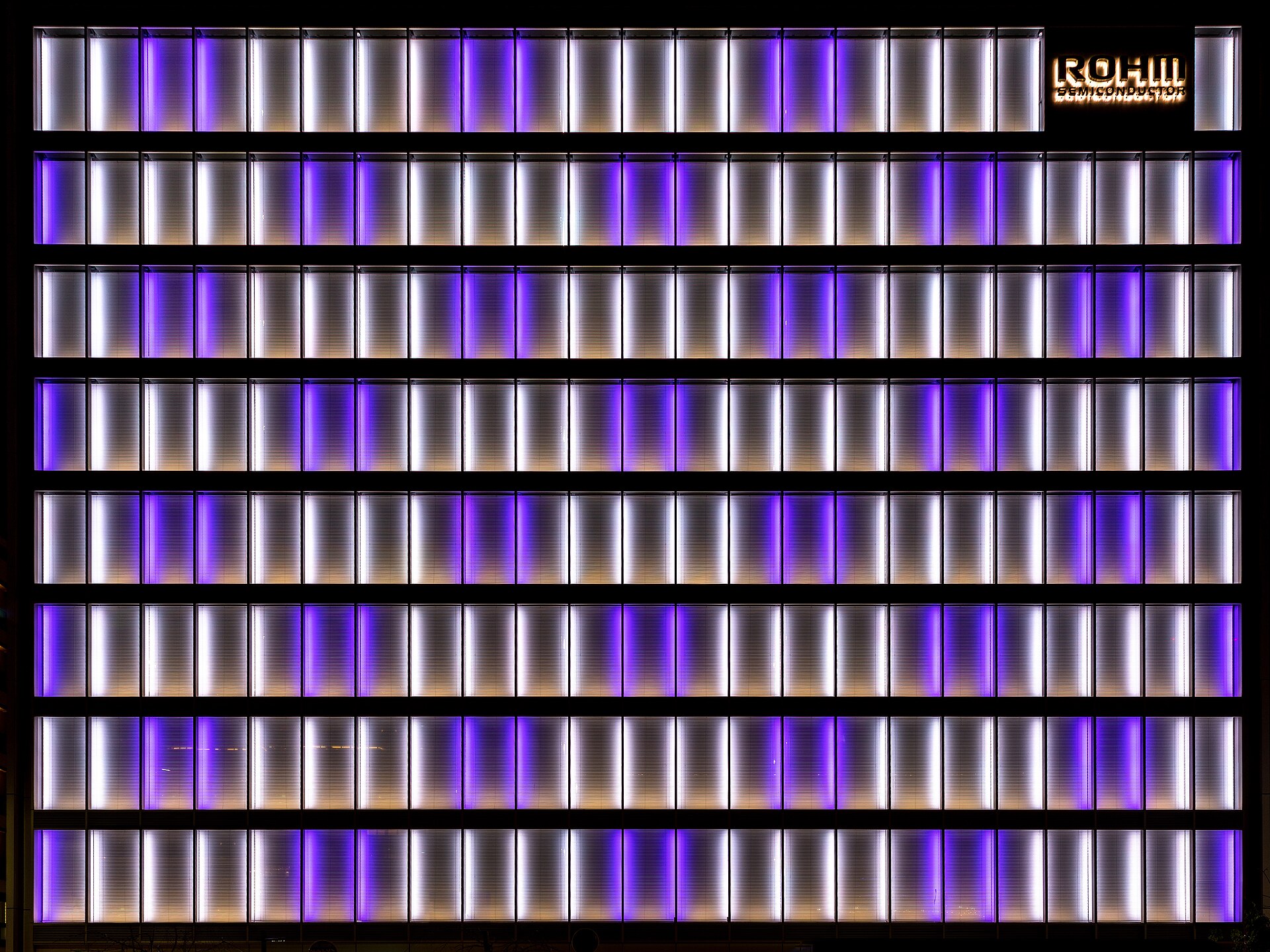

Facade lighting is architecture after dark, and it is also a floodlight on someone else’s pillow. Australian cities are good at both. We have sandstone, brick, glass curtain wall and a habit of aiming a bracket flood “up a bit” until the logo reads from the freeway. The photograph from the opposite kerb is always flattering. The measurement plane at the first-floor bedroom is the design.
This essay is a working method for architectural wash, grazing, accents and the ordinary flood that still appears on a warehouse parapet. It sits on the outdoor and civic hub with car parks, precincts and sports lighting. Interior rooms that become lanterns — glazed dining, showrooms, offices — are hospitality, automotive and workplace problems first. Controls belong with DALI and BMS.
Name the surface and the neighbour
A facade is a material with a reflectance, a texture and a legal overlay. Glass wants very little light; it will bounce whatever you give it into the street and the tower opposite. Dark brick drinks a wash and still shows a hot-spot if you stand a flood too close. Sandstone and limestone change colour under a narrow-band LED; a “warm white” that looked honest on a board can go apricot at night. Metal cladding can glare like a car bonnet. Walk the material at dusk with a sample luminaire before you buy a hundred metres of grazer.
Then name the receivers. Residential windows, a hotel, a hospital ward, a park, a rail corridor, a flight path, a turtle beach in a few Queensland cases. AS/NZS 4282 is the Australian document that treats those receivers as a design limit, not a courtesy. Open the current edition and the council DCP. Write the measurement planes — vertical at the window, illuminance on the boundary, luminous intensity toward the observer — in the brief, not in the complaint response.
Heritage overlays add a second consent. Fixings, cable paths, and whether the stone can take a drilled cleat are conservation questions. The lighting answer is often a remote source, a cornice grazer, or no light. A colourful wash on a listed town hall is not automatically civic pride. It can be an advertisement the heritage officer did not approve.
Spill is a geometry problem
Most facade glare is not “too many lumens”. It is a luminaire that can see the bedroom. Uplights in a garden drain, floods on a high bracket with no visor, linear grazers that run past the parapet into the sky — those are intensity toward an observer. Shield, aim down where you can, and put the source where the building itself is the visor.
Grazing — a tight optic close to the wall — shows texture and dies at the cornice if you stop it there. Washing — a wider source further off the wall — flattens brick and is harder to contain. Accents on a column or a sculpture should be a small, aimed, locked fitting, not a flood “for flexibility”. Flexibility is how the after-hours cleaner re-aims a head to light the loading dock.
Sky glow is the sum of every poorly aimed flood in the suburb. Even a CBD office that “only” washes two faces is part of that sum if the light misses the building. Full cut-off street lighting and a facade that stops at the parapet are the same discipline as precinct dark-sky work. If the project sits near an observatory or a declared dark-sky place, treat upward waste as a hard limit, not a vibe.
Colour temperature outdoors is not a dining-room decision — see CRI and TM-30. 2700–3000 K is often easier on neighbours and on warm materials. 4000 K on sandstone is a common Australian mistake. RGB is an event tool. A nightly purple office is advertising. Write a default architectural white, a curfew, and an event scene with a named owner.
Floodlighting that is not a facade
Plenty of “facade” packages are actually area floods: a yard, a loading dock, a used-car line, a school hall wall used as a cricket sight screen. Those are sports or car-park tasks wearing an architectural name. A dock needs vertical light on a face, a cut-off, and a presence scene — not a flood aimed at the wall because the wall was handy.
Sports spill onto facades the other way. Do not “fix” an oval that hits houses by adding building wash. Fix the field aiming. Retail and hospitality facades include signs and a glazed room that is already bright. A wash plus a 100 per cent dining scene is two projects glaring at the same footpath. See merchandise window curfews.
Controls, curfews and who owns the clock
The most expensive facade is the one that runs from civil dusk to sunrise because the time clock washed out in a storm and nobody is paid to notice. Write:
- A default on-time tied to sunset, not to a guess.
- A curfew — often 10 p.m. or 11 p.m. in mixed-use streets, earlier beside houses — after which the wash dies or drops to a security minimum.
- An event override with a credential and a log, so a colour show cannot become the new default.
- A fail mode that does not fail on. A facade that sticks on is a neighbour event.
DALI, a small lighting controller or the BMS can do this. A consumer astronomical timer in a damp pit cannot. If the facade shares a site with interior lighting, do not put both on the same “all on” switch the cleaner uses.
Energy is obvious and still missed. Facade lighting is all waste if nobody is there to see it. Section J will catch some exterior lighting attached to buildings; NABERS and Green Star will notice a tower that wears a permanent halo. Use the least lumen that makes the architecture readable from the intended viewing distance. A wash designed to read from a circling helicopter is not a street design.
Heritage, insects and maintenance
Spectrum and insects belong in the same paragraph. Cool, blue-rich light gathers flying insects on sandstone and in eaves; that stains the stone and feeds the spiders. Warmer spectra and a curfew are a maintenance strategy, not only a neighbour strategy. In tropical and subtropical work this is not theoretical — see climate-specific lighting.
Maintenance access is why facade lighting dies in year three. A grazer on a cornice with no rope-access plan is a permanent dark streak. Specify how the luminaire is cleaned, aimed again, and replaced. Marine-grade hardware in coastal streets. A glare visor that is still there after the first cherry-picker visit. LED colour shift on a facade is public; a green-shifted “white” wash on a civic building is a brand event you did not book.
Do not hide drivers in a roof space that cooks them.
On a sandstone civic building in inner Sydney we refused a colour wash: a 3000 K cornice grazer, a locked entry accent, a 10 p.m. curfew, and a 4282 calculation to the opposite terraces. On a Melbourne office the crown wash was an event scene, not a nightly look — “up to twelve nights a year”, written into the software. Photographs were taken before curfew.
What to write in the specification
- Name the surfaces, the viewing locations, and every sensitive receiver.
- Name the lighting type: graze, wash, accent, sign, flood-as-task — separately.
- Name AS/NZS 4282 limits, council overlays and any heritage conditions.
- Name CCT, a fidelity target for materials, and a ban on unauthorised colour as the nightly default.
- Name aiming locks, visors, upward-light limits and a mock-up at dusk.
- Name curfew, fail mode, metering and access for maintenance.
Measurement on site
Commission after civil twilight, not at 5 p.m. in summer. Measure the facade luminance if you claimed a look; measure the neighbour vertical illuminance if you claimed compliance. Walk the opposite footpath and the nearest bedroom plane you are allowed to stand on. If you only stand in the architect’s favourite view cone, you will approve a flood.
A facade is allowed to be seen. It is not allowed to stare. Aim at the building, stop at the parapet, switch it off when the street has gone home, and leave the colour machine in the cupboard except on the nights you named.
Questions readers ask
- Is a pretty night photograph a facade design?
- No. A photograph hides the bedroom across the street and the lumen package on the parapet. Design to AS/NZS 4282 thinking, a curfew and a maintenance access plan, then take the photograph.
- Can I uplight a heritage sandstone facade?
- Sometimes, with a narrow, shielded source, a spectrum that does not turn the stone orange or green, and a council or heritage overlay that actually permits it. Grazing from a cornice often beats a flood on the footpath.
- Do RGB colour washes belong on an office building?
- As a rare event scene, perhaps. As the nightly look, they become advertising and a neighbour complaint. Write a white architectural scene as the default and a credentialed event override with a clock.
More in Outdoor and civic lighting
- Car-park lighting for safety and energy in Australia
CPTED, uniformity and the LED-versus-HID decision for Australian open and covered car parks — a method that starts with faces and cameras, not a pole catalogue.
- Precinct, campus and public-realm lighting
How Australian campuses and councils light paths, plazas and wayfinding without flattening the night or ignoring dark-sky and neighbour duties.
- Sports field and court lighting in Australia
Community cricket, AFL and tennis lighting — lux classes, glare to residents, and the difference between a training night and a broadcast fantasy.