Retail and hospitality lighting · 14 July 2025 · 8 min read
Supermarket fresh-food and aisle lighting
Aisles, fresh-food spectrum, refrigerated cabinets and the energy arithmetic that survives a night fill in an Australian supermarket.
By Priya Nair, Energy and sustainability editor, Brisbane, Queensland
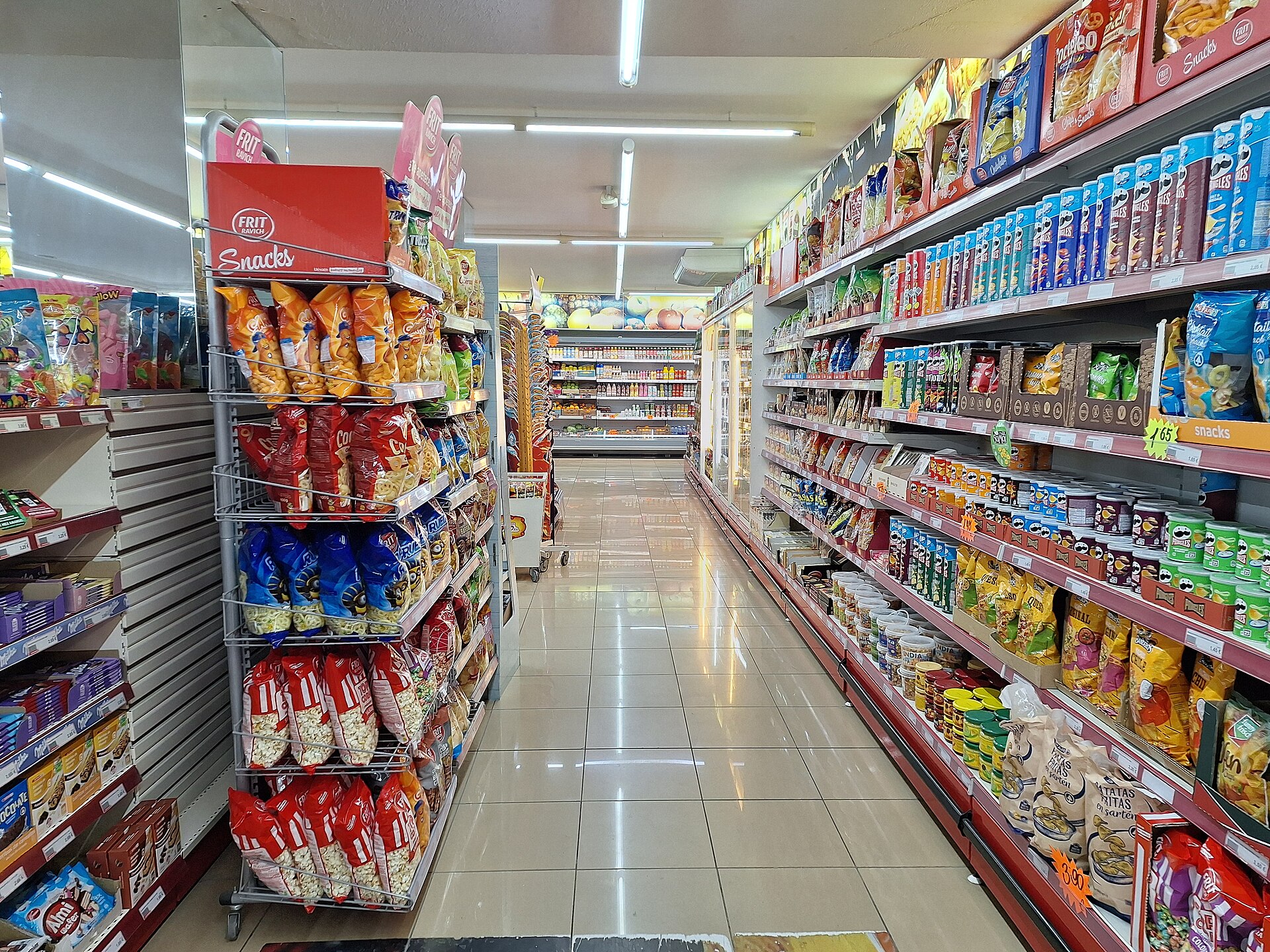

A supermarket is a warehouse that sells food under a brand. The aisle photograph is a vanishing point of perfect cans. The 2 a.m. reality is a pallet jack, a lift, a label that must be read, and a cabinet that already spends more energy than the lighting. Australian stores add daylight at the front, a service corridor at the back, and a fresh-food theatre in the middle that marketing wants to look like a market. Spectrum, vertical illuminance and power density all meet in that theatre.
This essay is an energy-and-merchandise method for grocery. It sits on the retail and hospitality hub with specialty retail and showrooms. Colour science is in CRI and TM-30. The power cap is Section J. If a vendor promises that a new aisle batten will pay for itself in eight months, ask for the hours, the tariff, the refrigeration interaction and a meter.
Aisles are vertical tasks
Customers read the face of the bay. Staff read the same face from a roll cage. The floor only needs to be safe. Specify maintained vertical illuminance on the shelf face — typically a band from about 0.4 m to 1.8 m — and a uniformity that does not leave the bottom soup can in a cave. A horizontal average in the centre of the aisle is the number that makes a false-colour plan look tidy and a night-fill team use phone torches.
Gondola height and reflectivity change everything. A white private-label pack on a cream shelf is not a dark pet-food bag on a charcoal gondola. Put the actual fixture and the actual packaging in the calculation, or at least a reflectance you asked the merchandiser for. Default 0.5 walls in software are a fiction in a 2.4 m canyon of cardboard.
Glare in aisles is a lift problem and a customer problem. Unshielded battens in a low ceiling sit in the field of view the moment anyone looks at the top shelf. That is why “more lumens, same batten” is not a retrofit. Ask for a batwing or aisle optic that throws to the shelf and keeps intensity out of the eyes. Our office glare argument applies, except the “screen” is now a glossy packet and a scissor lift.
End caps are merchandise, not circulation. Switch them separately so a campaign can go bright without lifting the whole run. Tight-beam clusters on every end will make the rest of the aisle feel dim — the uniformity mistake 1680 already warns about.
Fresh food is a spectrum brief
Produce, meat, fish, bakery and deli are colour-critical and temperature-critical. They are also the aisles customers use to judge whether the store is clean. A tired spectrum makes lettuce look boiled and chicken look old. An aggressive “meat LED” that oversaturates reds can make beef look theatrical and poultry look wrong. Mock the actual protein under the proposed lamp, in the actual case, with the glass door closed.
Write TM-30 fidelity and gamut targets for fresh food, not only Ra 80 from a dry-goods batten. Then decide whether the store wants one family of white through the shop — easier for staff and for Section J substitutions — or a distinct fresh-food spectrum. Distinct can work. Distinct without a mock-up is how a Brisbane produce wall looks superb in the first week and faintly green after a driver substitution.
Bakery wants crust, not a 6000 K “crisp white” that makes pastry look stale. Deli glass is a cabinet problem: light the product from inside so the sneeze guard is not a mirror. See merchandise lighting. Daylight at the doors will beat any LED at 10 a.m. Dim the first bays; photocells that only switch the front row create a flicker shoppers blame on “cheap LEDs”.
Cabinets are luminaires and refrigerators
Open multidecks, glass-door freezers and service counters already carry their own LED strips. Those strips do three jobs: they sell the product, they add heat that the refrigeration plant must remove, and they glare. A retrofit that only touches the ceiling and ignores the cases will leave the store looking like two different decades.
Coordinate with the refrigeration contractor. A high-output in-case LED can raise case temperature or force the plant to work harder, eating the lighting energy you just saved. A well-designed door LED with a sensible spectrum can cut ceiling load because the product is already lit. Do not double-light a glass-door freezer from the aisle “to be safe”. You will pay twice and invent reflections.
Specify in-case colour the same way you specify aisle colour. A pink meat tube next to a 4000 K cheese deck is a brand decision; make it on purpose. Write IP, cleanability, and what happens when a strip fails. Night photography with the doors closed is mandatory.
Energy that survives a meter
Grocery lighting runs long hours. That is why payback stories are easy to invent and hard to meter. Section J will limit the installed lighting power density for the sales floor. NABERS Energy for a whole building will notice the lights if they are still on at 3 a.m. in an empty front-of-house. Write scenes:
- Trade: shopper vertical targets, fresh-food on, end caps as merchandised.
- Night fill: enough vertical light on labels and a safer, less glaring aisle for lifts; front-of-house theatre off or down.
- Clean and reset: a short, brighter scene if needed, then back.
- Closed / security: a minimum that supports cameras and a walk-through, not a half-store left at trade output.
Addressable control — DALI or the retailer’s equivalent — is how you stop a store manager from running trade scene for twenty hours because the override is a breaker. Log the overrides. If the BMS cannot tell you which scene ran last Tuesday, you do not have an energy strategy.
Compare LED aisle optics with the old T8 run on a vertical target, not a lumen package. A 1-for-1 swap that ignores the shelf face can make the store dimmer where it matters. Assume dust and cardboard fibre in the maintenance factor.
If the retrofit lets you close more case doors, the kWh story is a plant story. If it only changes the ceiling, say so. Docks and production rooms are industrial tasks, not “warm grocery”. The customer car park is outdoor and civic work: see car-park lighting.
On a 3,200 square metre Queensland full-line we refused a single 800 lx average. Dry grocery was vertical lux on the bay. Produce and meat had a mocked spectrum. Frozen was not double-lit. Night fill was a named scene. The refrigeration engineer sat in the first lighting meeting.
What to write in the specification
- Name the store type, hours, and whether night fill, 24-hour trade or both.
- Name vertical targets on grocery bays, fresh-food planes and service counters.
- Name colour: a store-wide white plus any fresh-food exception, with TM-30 and a mock-up.
- Name cabinets as part of the lighting design and part of the refrigeration load.
- Name scenes, metering and the Section J / NABERS claim so a substitution cannot keep the wattage and lose the optic.
- Name cleanability, IP and the maintenance factor for a dusty grocery volume.
Measurement that is not a postcard
Measure vertical on dressed bays, in-case with doors closed, and the front-of-house at noon and after dusk. Ride a lift and look at the top shelf. If you only walk the centreline with a meter pointing at the floor, you will certify a store that staff hate at 2 a.m.
Supermarket lighting will not choose your spectrum for you. It will stop you treating an aisle as a floor, a cabinet as someone else’s contract, and a payback slide as a meter. Light the shelf face, tell the truth about the food, and switch the theatre off when the shoppers have gone.
Questions readers ask
- Should fresh food run a special pink or red spectrum?
- Only if you have mocked the actual protein and produce, and you can defend the colour as honest. A meat-enhancing LED that makes chicken look salmon is a complaint waiting for a food-safety officer, not a merchandising win.
- Do cabinet LEDs count in the store lighting budget?
- Often yes for energy models, and they always count for glare and colour. Treat in-case lighting as part of the sales-floor design, then ask the services engineer how Section J and the refrigeration load share the credit.
- Is a bright aisle the same as a safe night-fill aisle?
- No. Night fill needs vertical light on labels, a truck dock, and less glare for staff on lifts. A Sunday shopper scene left on all night wastes energy and still leaves the top shelf unread.
More in Retail and hospitality lighting
- Retail lighting for merchandise and dwell time
How to light Australian shops so colour, vertical illuminance and glass cabinets help people stay and buy, rather than flatten the stock or glare the till.
- Hospitality lighting for restaurants and hotels
Dining scenes, commercial kitchens, guest rooms and night-time neighbour light — a practical method for Australian hospitality rooms that still have to pass inspection.
- Automotive and showroom lighting design
How to light car paint, glass and ceiling grids in Australian dealerships without glare, and how to run a honest after-hours security scene.