Workplace and office lighting · 22 July 2025 · 8 min read
Circadian and tunable-white lighting for Australian workplaces
What melanopic EDI, WELL-style circadian credits and tunable-white hardware can actually do in an Australian office — and the wellness claims a specifier should refuse to write.
By Priya Nair, Energy and sustainability editor, Brisbane, Queensland
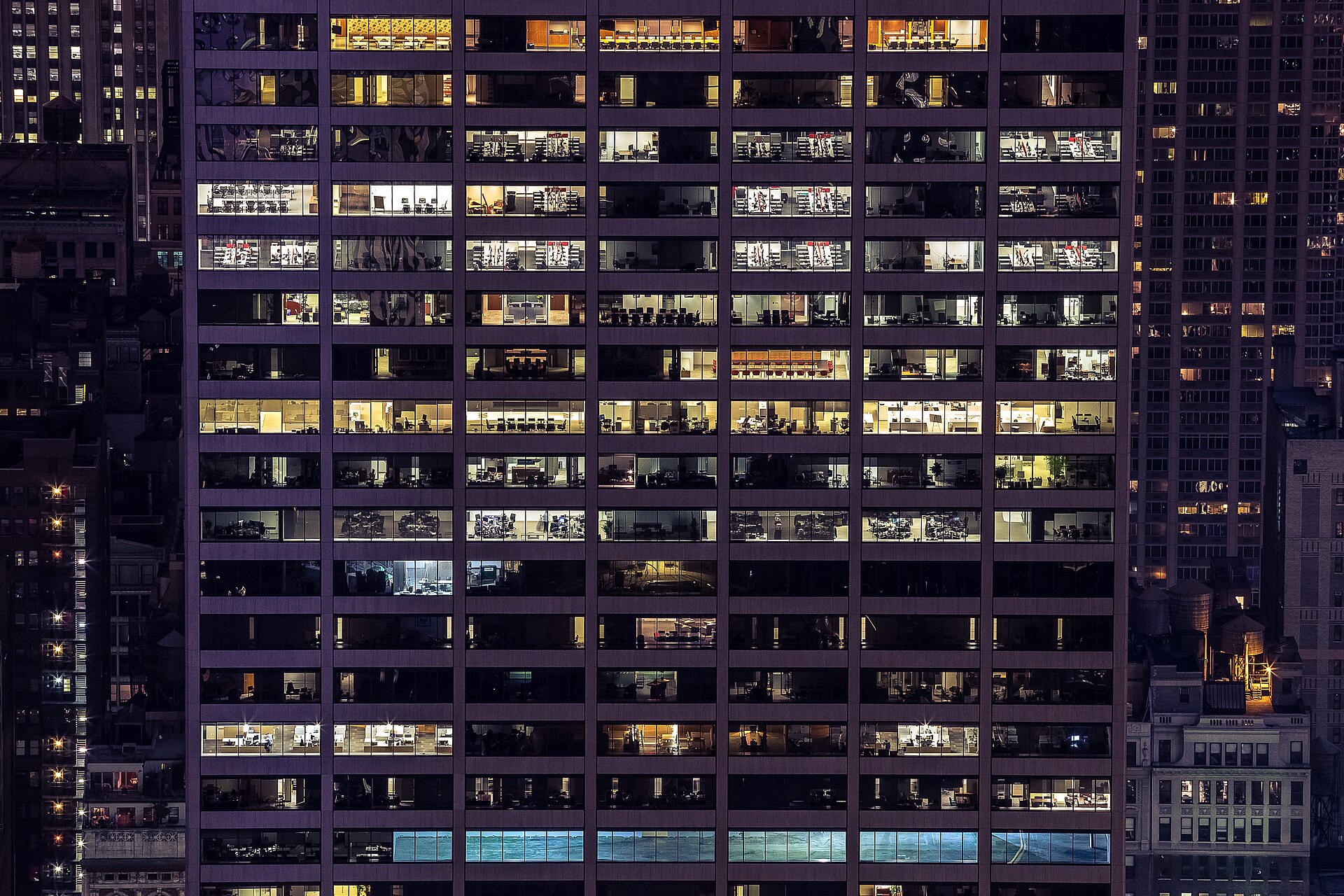

The lighting industry has a sentence it would like copied into every brief: “circadian-ready, tunable-white, 2700–6500 K, WELL-aligned.” It sounds like medicine. It is usually a two-channel LED and a clock. In a Brisbane tenancy with a northern glass wall and a day-shift workforce, the sky is already doing the circadian work. Buying a spectrum that pretends to be dawn under a plasterboard bulkhead is not the same as designing for people.
This essay is a briefing method for specifiers handed a wellness slide. It sits beside our notes on colour temperature, CRI and TM-30, daylight in Australian buildings and NCC Section J.
What is being sold
“Human-centric” and “circadian” are marketing umbrellas, not Australian Standards. The biology is real and narrower than the brochure. Intrinsically photosensitive retinal ganglion cells contribute to the body’s clock and are more sensitive to short-wavelength light than the photopic curve that AS/NZS 1680 uses for visual tasks. A source that looks acceptably white can still be a weak or a strong circadian stimulus. That does not license a productivity percentage on a tender cover.
What vendors usually ship is tunable-white hardware: two LED channels mixed to slide correlated colour temperature. That is a colour-control product. It becomes a circadian product only if you specify the spectrum at the eye, the hours it runs, who may override it, and what you will not claim when the sick-day graph refuses to move. WELL and similar rating tools publish melanopic targets as optional credits. They are not a clause in the National Construction Code.
Melanopic EDI is not a second lux number
CIE S 026:2018 defines melanopic equivalent daylight illuminance as the illuminance of CIE D65 that produces the same melanopic irradiance as the test source. Divide that figure by ordinary photopic lux and you have a melanopic daylight efficacy ratio. You cannot read that performance from a CCT sticker. Ask for a spectral power distribution and a melanopic ratio at the scene you intend to run, calculated on a vertical plane at eye height — 1.2 m is the usual seated assumption. A horizontal 320 lx desk calculation does not answer the question.
A high melanopic target is mostly an illuminance target. If a rating tool asks for a few hundred melanopic EDI at the eye for several morning hours, a mid-range 4000 K source may need more photopic lux than the desk requires. That is how “wellness” becomes a glare problem. Pair any melanopic clause with glare control, or the morning scene will sit in every laptop. Daylight still wins on a clear Australian morning. A perimeter desk with a view of sky can exceed indoor melanopic targets without a single extra watt. The honest circadian design for most day-shift floors is shade, blinds people will use, and electric light that steps down toward the glass.
Day-shift offices are not the interesting case
Most Australian office hours are roughly eight to six. Occupants commute in daylight for much of the year, sit under a mix of sky and 4000 K, and leave before true night. For that pattern, a slow CCT ramp from 5000 K at 8 a.m. to 3000 K at 5 p.m. is theatre unless you have measured the eye-plane stimulus and shown that the electric contribution matters.
What matters on those floors is consistency. People notice a sudden green shift, a panel that is 3500 K next to one that is 5000 K, and a “sunset” scene that makes the tea point look like a bar while the desks are still in a mark-up session. Colour quality still belongs in the spec — CRI and TM-30 for faces, finishes and food — whether or not you chase a clock. If the client’s real goal is a rating-tool point, write the credit, the version, the measurement plane and the hours. Do not translate that point into a medical benefit in the employer’s handbook.
Night-shift and twenty-four-hour floors
The brief changes when people must stay alert at 02:00 and then sleep in daylight. Contact centres, hospital administration, airport operations and some FIFO support offices in the west are not day-shift tenancies wearing a darker scene. High melanopic stimulus late at night can support alertness and also delay sleep after the shift. Low melanopic, warmer light can be kinder to the commute home and worse for a safety-critical screen.
Practical splits we have used: a 24-hour operations island with a cooler, higher-vertical scene, separated from a quieter write-up zone that runs warmer after midnight; and a rule that the “alert” scene is a supervisor action, not a clock that dumps 6500 K onto a whole floor because the BMS rebooted. Do not sell the same schedule to a Sydney legal floor and a Perth control room.
Hardware is not a protocol
Tunable-white luminaires need a control story. Two-channel DALI Type 8 can hold a CCT and a level. If the open-plan spec already uses DALI and a BMS, add colour as a named capability with a commissioning plan. Write the scenes, not only the CCT range. “2700–6500 K” is a catalogue line. “08:00 desk scene, 4000 K, stated melanopic EDI at 1.2 m, dimmable to the daylight zone” is a design.
Name who owns the clock — lighting controller, BMS, or a cloud service the facility manager cannot log into. Name what happens after daylight saving. New South Wales, Victoria, South Australia, Tasmania and the ACT change clocks. Queensland, Western Australia and the Northern Territory do not. A sunrise scene keyed to wall time will be an hour late in Melbourne for half the year and never in Brisbane. If a team cannot lock 4000 K for a colour-proofing day, they will disable the lot. When a channel dies, does the luminaire go pink, drop to a single CCT, or go dark?
Energy, Section J and the morning boost
Tunable packages often carry a higher connected load than a single-CCT luminaire of the same delivered lumens. Mixed-channel operation is rarely as efficient as the best point on the datasheet. A morning “boost” that lifts vertical illuminance to chase melanopic EDI raises lighting power density at the exact hours the floor is full. Section J does not care that the extra watts were purchased for wellness. Model the highest scene you are willing to run as occupied lighting and decide whether the credit is worth the watts. NABERS will see the meter, not the brochure.
There is a cheaper circadian intervention on most Australian floors: maintain the daylight, fix the blinds, and stop over-lighting the core at night. Absence detection that actually turns the after-hours floor down will do more for sleep than a CCT slider nobody asked for. Payback stories that start with “reduced absenteeism” are not engineering. If a supplier will not separate hardware, controls, commissioning and the energy delta from a medical claim, treat the package as a finish selection.
People the scene forgets
Automatic colour change is not a neutral act. Occupants with migraine, photophobia or low vision often report that a shifting spectrum is another thing the building does to them. Accessible and inclusive lighting is the prior duty. A wellness credit that cannot be locked, locally dimmed or escaped is not inclusive. Proofing rooms may need a stable spectrum more than a story about dawn. Write them out of the clock.
What to write, and what to refuse
- Name the visual task and the 1680 maintained illuminance first. Circadian metrics do not replace the desk.
- If a rating-tool credit is required, name the tool, version, melanopic quantity, measurement plane, hours and the percentage of workstations.
- Name the SPD or melanopic ratio at each specified scene, not only a CCT range.
- Name the control path, clock owner, daylight-saving behaviour, override and failure mode.
- Name the energy scene used in Section J and how after-hours lighting is forced down.
- Name the rooms that are exempt.
Refuse, in writing, any clause that promises better sleep, fewer sick days or a percentage lift in output. If you need the longer template, use how to write a commercial lighting specification. For a glass box that tries to run a “sunset” scene behind a video call, see meeting-room lighting.
Light the task. Admit what the sky already does. Buy a spectrum only when you can measure it and live with the watts.
Questions readers ask
- Does tunable-white lighting meet a circadian duty in Australia?
- No Australian WHS or NCC clause requires a melanopic target for a day-shift office. Tunable hardware is optional. Daylight, spectrum and timing still have to be designed if you choose to chase a rating-tool credit.
- Is 6500 K in the morning enough to claim a circadian design?
- No. Melanopic EDI depends on spectrum and how much light reaches the eye, not on a correlated colour temperature printed on a driver. A dim 6500 K scene can lose to a brighter 4000 K one.
- Will a circadian scene save energy?
- Often the opposite. Morning boost scenes raise vertical illuminance and lighting power. Model the high scene in your Section J calculation, not the pretty 4000 K still.
More in Workplace and office lighting
- AS/NZS 1680 office lighting levels for Australian workplaces
How to read maintained illuminance, uniformity and task categories in AS/NZS 1680 when you are specifying a real Australian office rather than a catalogue page.
- Glare control for open-plan Australian offices
Unified glare rating, window brightness and polished concrete — a practical method for making Australian open-plan floors usable after lunch.
- Meeting-room and collaboration-space lighting for Australian offices
How to light Australian meeting rooms and glass collaboration boxes for faces on camera, whiteboards, scenes people will actually press, and the acoustic clashes that wreck a ceiling plan.